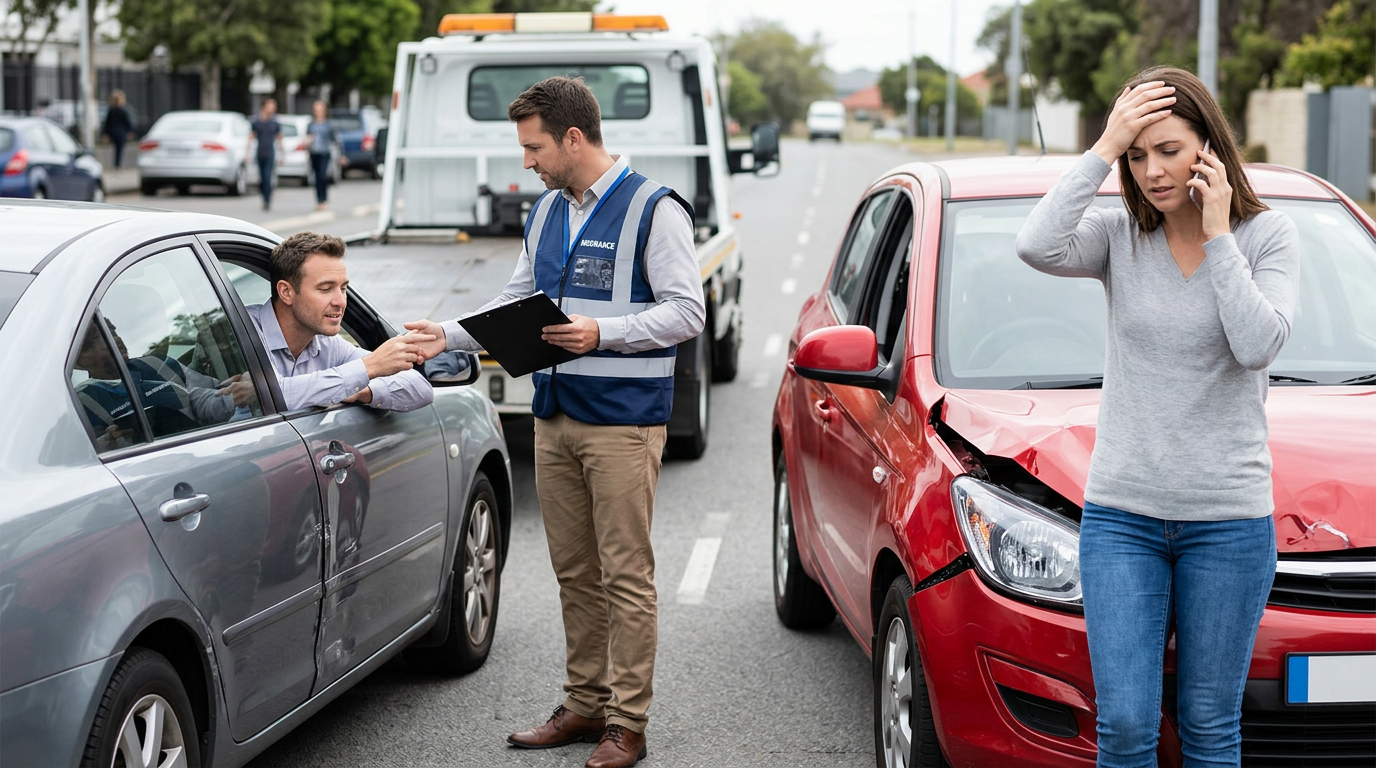
You’ve probably heard that third-party insurance is the legal minimum and that it’s cheaper than other options. Maybe you chose it because it was the most affordable.
But do you really know what you’re getting for your money?
Most drivers don’t. Many assume third-party insurance will protect them if something goes wrong, but that can be a risky mistake.
Let’s look at what third-party insurance does and doesn’t cover, and why knowing the difference could save you from serious financial trouble.
The Legal Foundation: What Every Third-Party Policy Must Cover
In almost every country, third-party insurance is required by law. You can’t drive legally without it. Here’s what the law says you must have.
Third-party liability covers:
- Damage you cause to other people’s vehicles. If you hit another car, your insurance pays to repair that car.
- Injuries you cause to other people. If someone is hurt in an accident you caused, your insurance pays for their medical treatment, rehabilitation, and compensation for pain and suffering.
- Damage you cause to property. If you crash into a lamppost, a fence, a building, or any other structure, your insurance pays for the repairs.
These are the basics. Every third-party policy must include them by law. Without this coverage, you can’t register your car or drive on public roads.
Remember, third-party insurance pays for damage you cause to others, not for damage to you or your own property. This difference is crucial.
What Third-Party Insurance Covers (The Complete List)
Some third-party policies offer extra coverage beyond the legal minimum. Always read your policy carefully, since not all plans include these extras.
Legal defense coverage:
If someone sues you after an accident, your insurance usually covers lawyers and legal fees. Still, check your policy limits to be sure.
Emergency medical expenses for you:
Some third-party policies offer a small amount (€500 to €2,000) for your emergency medical treatment right after an accident. This isn’t guaranteed, and many policies don’t include it.
Passenger liability:
If your passengers are hurt in an accident you caused, third-party insurance covers their injuries. In most places, this is required by law.
Uninsured driver protection (varies by country):
If an uninsured driver hits you, some third-party policies will cover your injuries and damage. This isn’t always the case. In some countries, a government fund helps with uninsured accidents. In others, you need special coverage.
What Third-Party Insurance Does NOT Cover (The Dangerous Gaps)
This is where many drivers run into problems. They think third-party covers them, but it doesn’t. Here are the most common and costly gaps.
1. Damage to your own car from an accident you cause.
This is the biggest gap. If you rear-end someone at a traffic light, your insurance pays for the other car’s damage. But your own car? You get nothing. You’ll pay for every dent, broken headlight, and crushed fender yourself.
Example: You cause a minor accident. The other car needs repairs totaling €1,500. Your car needs €4,000 in repairs. Your third-party insurance pays €1,500 to the other driver. You pay €4,000 for your own car.
2. Damage to your own car from a single-vehicle accident.
If you hit a tree, slide into a ditch, or back into a lamppost, and no other driver is involved, third-party insurance pays nothing. You’re responsible for your own car.
Example: You lose control on black ice and hit a guardrail. Your car is totaled. Third-party insurance pays zero. You have no car and no compensation.
3. Theft of your car or its parts.
If someone steals your car, your wheels, your catalytic converter, or your radio, third-party insurance won’t help. Theft isn’t covered.
Example: You park on the street overnight. You wake up to find your car gone. Third-party insurance offers no help. You still owe money on your car loan. You still need a car to get to work.
4. Fire damage to your car.
If your car catches fire because of an electrical problem, an accident, or arson, third-party insurance doesn’t pay. Fire damage isn’t covered.
Example: An electrical short in your engine bay starts a fire. Your car burns completely. Third-party insurance pays zero. You are left with a pile of ash and no compensation.
5. Windshield or window damage.
If a rock cracks your windshield or someone breaks your window to steal from your car, third-party insurance won’t pay. Glass damage isn’t covered.
Example: A hailstorm shatters your rear window. The replacement costs €400. You pay every euro.
6. Natural disasters.
If hail damages your car, a flood ruins your engine, or a tree falls on your roof, third-party insurance doesn’t pay. Natural disasters aren’t covered.
7. Vandalism.
If someone keys your car, sprays paint on it, or slashes your tires, third-party insurance won’t help. Vandalism isn’t covered.
8. Mechanical breakdowns or wear and tear.
If your engine fails from missed oil changes, your clutch wears out, or your timing belt or transmission breaks, third-party insurance doesn’t pay. Maintenance is up to you.
9. Your own medical expenses beyond emergency care.
If you’re hurt in an accident you caused, third-party insurance might cover emergency room treatment. But ongoing care, physical therapy, lost wages, and pain and suffering aren’t covered.
10. Roadside assistance or towing.
If your car breaks down, you run out of gas, get a flat tire, or lock your keys inside, third-party insurance won’t help unless you’ve added roadside assistance.
The Real-World Consequences
Here are three real-life examples where the driver only has third-party insurance.
Scenario 1: The fender bender
You’re distracted for one second. You rear-end the car in front of you at a stoplight. Low speed. Minor damage.
- Other driver’s car repair: €1,200 (covered by your insurance)
- Your car repair: €2,500 (you pay)
- Total out of pocket: €2,500
Scenario 2: The single-car accident
You hit black ice on a country road. You slide into a tree. Your car is a total loss. It was worth €8,000.
- Tree damage: €0 (no property damage to others)
- Your car replacement: €8,000 (you pay)
- Total out of pocket: €8,000
Scenario 3: The theft
You park your car outside your apartment. You wake up to an empty space. Your car is gone. You still owe €6,000 on your car loan.
- Theft recovery: €0 (your insurance pays nothing)
- Remaining loan balance: €6,000 (you still owe this)
- New car purchase: €10,000 (you need another car)
- Total out of pocket: €16,000
Should You Only Have Third-Party Insurance?
Third-party insurance works well for some drivers, but it’s not the best choice for everyone.
Third-party makes sense if:
- Your car is worth less than €3,000
- You could afford to replace your car tomorrow without financial hardship.
- You have savings to cover repairs or a total loss.
- You drive very few kilometers per year.
- Your car is old, and comprehensive insurance would cost more than the car is worth.
Third-party is dangerous if:
- Your car is worth more than €5,000
- You have a car loan or lease (the bank requires comprehensive)
- You cannot afford an unexpected €5,000+ expense.
- You park on the street in an area with a history of theft or vandalism.
- You live in an area with hail, floods, or severe weather.
The Middle Option: Third-Party Plus
Most insurers offer a middle option called “third-party plus,” “third-party, fire and theft,” or “extended third-party.”
This adds coverage for:
- Fire damage to your own car
- Theft of your entire car or parts
- Windshield and window damage
- Often includes roadside assistance.
What it still does NOT cover:
- At-fault accident damage to your own car
- Single-vehicle accidents (hitting a tree or guardrail)
- Natural disasters (unless added)
- Vandalism (unless added)
For many drivers with cars valued between €3,000 and €10,000, third-party plus offers a good balance between protection and cost.
The Bottom Line
Third-party insurance covers damage you cause to others. It does not cover damage to yourself or your property.
Read your policy and understand what’s not covered. Ask yourself if you could afford to replace your car or pay for major repairs out of your own pocket.
If you can’t, third-party alone isn’t enough. You’ll need third-party plus or comprehensive coverage.
The cheapest insurance isn’t always the best value. The best policy is the one that covers what you can’t afford to lose.