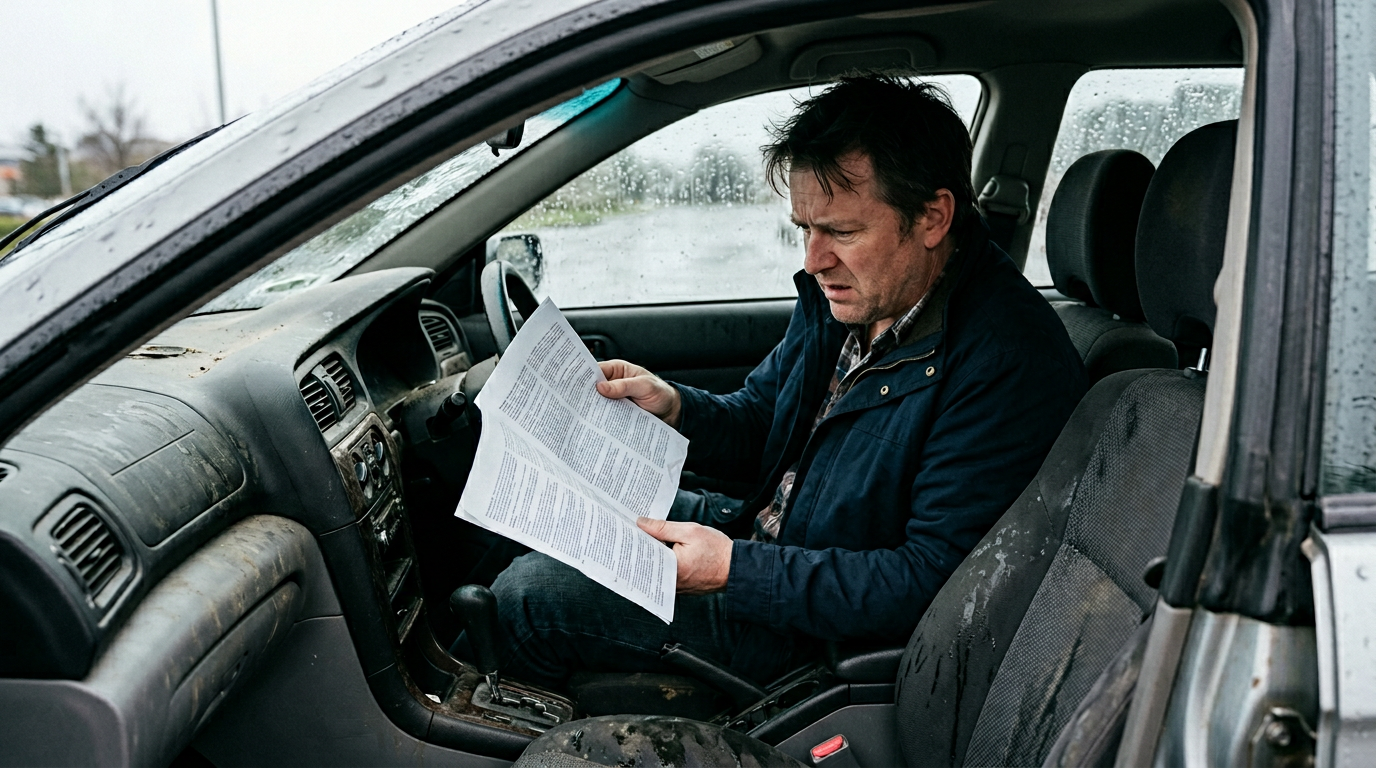
You bought insurance to protect yourself. You pay your premium every month. You assume if something bad happens, you are covered. That is what insurance is for, right?
Not exactly.
Every insurance policy has exclusions. These are things your policy will NOT cover. Most drivers never read them. The fine print is boring, long, and full of legal language. So you skip it. That is exactly what insurance companies expect.
Let me spare you an unpleasant shock by highlighting five surprising things your car insurance probably will not cover. Before moving on, familiarize yourself with these exclusions to avoid future problems.
1. Mechanical Breakdowns and Wear and Tear
Your engine makes a strange noise, then stops. You take it to a mechanic. The timing belt snapped. The repair will cost €2,000. You file a claim with your insurance company. They deny it immediately.
Why? Because car insurance is not a warranty. It does not cover mechanical failures or normal wear and tear. Your engine, transmission, clutch, brakes, suspension, and exhaust system are your responsibility. If they break because they are old or poorly maintained, you pay for them.
What your policy covers: Damage caused by accidents, fire, theft, or natural disasters.
What is NOT covered: Your engine failing because you did not change the oil. Your clutch is wearing out. Your brakes need replacement. Your timing belt is snapping.
How to protect yourself: Follow your car’s maintenance schedule. Change the oil and replace the timing belt at the recommended interval. Keep your receipts. If you want protection against breakdowns, buy a separate mechanical breakdown insurance policy or a manufacturer’s extended warranty.
2. Personal Belongings Stolen from Your Car
Someone smashes your window and grabs your laptop, phone, and sunglasses. You file a claim. Your insurance company says your car insurance does not cover personal belongings.
This surprises almost everyone. Your car insurance covers the car but not the things inside it. Your laptop, phone, wallet, sunglasses, gym bag, and work equipment are not part of the vehicle.
What your policy covers: the car itself, the factory-installed stereo, the seats, and the dashboard.
What your policy does not cover: Laptop, phone, wallet, sunglasses, work tools, and a child’s tablet.
How to protect yourself: Check your home or renters’ insurance. Many home policies cover personal belongings stolen from your car, up to a limit (often €500-1,500). If you have expensive equipment, consider a separate personal articles policy.
3. Damage from Driving Under the Influence
You have a few drinks at a party. You think you are fine to drive, but you are wrong. You crash into a tree. Your car is totaled. You file a claim.
Your insurance company will pay for the damage to the tree (liability coverage is mandatory) but will NOT pay for damage to your own car. They will send you a bill for the tree repair and likely cancel your policy.
What your policy covers: Third-party liability (damage to others) is covered by law; you may be billed by the insurer for the full amount.
What is NOT covered: Damage to your own car. Your medical bills. And the insurer will demand repayment of any amounts they paid to third parties.
How to protect yourself: Do not drink and drive. Use a designated driver, taxi, or rideshare. The cost of a ride is nothing compared to an accident without coverage.
4. Using Your Car for Business Without Declaring It
You sign up for a food delivery app and start delivering meals in your spare time. You cause an accident while driving and file a claim.
Your insurance company investigates and asks if you were using your car for commercial purposes. You say yes. They deny your claim entirely.
Standard personal car insurance policies exclude commercial use. If you use your car to deliver food, transport passengers (Uber, Lyft), or carry goods for payment, you need commercial insurance.
What is covered: Driving to work, running errands, visiting friends, and taking vacations.
What your policy does not cover: Delivering food through apps, driving passengers, transporting goods for business.
How to protect yourself: If you use your car for business, buy a commercial insurance policy or a rideshare endorsement. Tell your insurer exactly how you use your car. It will cost more but will pay when you need it.
5. Track Days, Racing, and Driver Education Events
You sign up for a track day at a local racing circuit. It is not a race and there is no timing. It is just for fun. You lose control and hit a barrier. Your car is damaged.
You file a claim, but your insurance company denies it. Since most policies specifically exclude driving on a racing surface, closed course, or any facility designed for speed, even non-competitive events are considered high-risk. The insurer sees any track use as riskier than normal driving, which is why you are not covered.
What your policy covers: Driving on public roads, parking lots, and private property (with permission).
What your policy does not cover: Events on racetracks, speedways, closed circuits. Some exclude driver education events, autocross, and performance schools.
How to protect yourself: If you want to drive on a track, buy specialized track day insurance. It is expensive because track driving is risky. Do not assume your regular policy covers you. It does not.
Bonus Exclusion: Driving Without a Valid License
Your license expires and you forget to renew it. You drive for weeks without realizing your license is invalid. Then you have an accident.
Your insurance company denies your claim. Driving without a valid license is a fundamental breach of your insurance contract. It does not matter that you did not know or that you are a safe driver. Your policy is void.
How to protect yourself: Check your license expiration date. Set a calendar reminder. Renew on time. If your license is suspended for any reason, do not drive. Not even once.
How to Read Your Policy’s Fine Print
You do not need to read every word of your policy, but you must read the exclusions section.
Where to find it: Look for a section titled “Exclusions,” “What Is Not Covered,” “Limitations,” or “Risks Excluded.”
What to look for: Any activity or situation that might apply to you. Do you use your car for business? Do you have expensive belongings in your car? Do you drive on tracks? Do you have an older car that might have mechanical issues?
What to do: If you see an exclusion that concerns you, call your insurer and ask if your policy excludes [X] and if you can add coverage for it. Sometimes you can, sometimes you cannot. But at least you will know.
The Bottom Line
Your car insurance does not cover everything. Mechanical breakdowns, personal belongings, driving under the influence, business use, and track days are often excluded. Read your policy. Know what is not covered before you need to file a claim.
The fine print is boring, but ignorance is expensive. Take 30 minutes today to read your exclusions. You might save thousands of euros tomorrow.