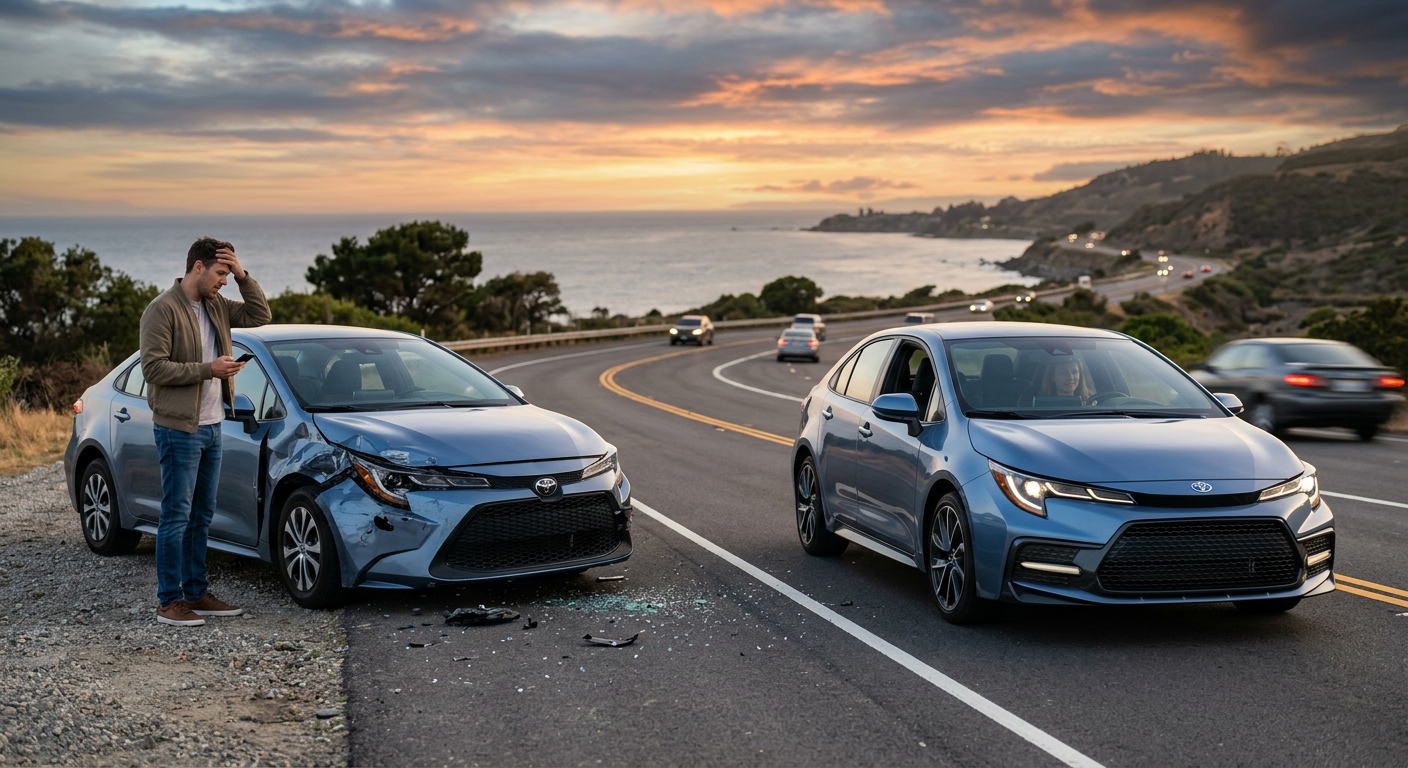
You are at an important crossroads as a driver, making a significant financial decision. On one side is third-party insurance—affordable, straightforward, and covering the legal minimum. On the other side is comprehensive insurance—costlier, more detailed, and offering broad protection.
Most drivers base their choice solely on monthly payments. They are drawn to the lower amount and make a quick purchase. But this decision can cost thousands of euros in the long run.
Let’s examine the bigger picture, beyond just monthly premiums. Which insurance truly saves you money over three, five, or ten years? The answer might surprise you.
The Simple Math: Premium vs. Risk
InsuInsurance is a bet. You bet you will have an accident. The insurance company bets you will not. The premium is the price of the bet. Third-party insurance: You pay a low premium. You bet that you will not have an at-fault accident. If you are wrong, you pay for your own car repairs out of pocket.
With comprehensive insurance, you pay a higher premium to prepare for the possibility of an accident. If no accidents occur, you pay more for extended peace of mind. If an accident does occur, the insurance company covers your repairs.
The critical question is not which premium is lower, but which option better fits your specific situation.
The Long-Term Cost Comparison
Let me show you the math over five years for three drivers.
Driver A: Low-risk driver (experienced, safe, low annual mileage)
- Car value: €8,000
- Third-party annual premium: €400
- Comprehensive annual premium: €700 (€300 more per year)
Scenario 1: No accidents in five years
- Third-party total cost: €2,000
- Comprehensive total cost: €3,500
- Savings with third-party: €1,500
Scenario 2: One at-fault accident in year three. Repair cost: €4,000.
- Third-party total cost: €2,000 (premiums) + €4,000 (repair) = €6,000
- Comprehensive total cost: €3,500 (premiums) + €500 (deductible) = €4,000
- Savings with comprehensive: €2,000
For Driver A, a third party saves money if Driver A has no accidents. Comprehensive saves money if there is one accident. The break-even point is the accident probability. Low-risk drivers may prefer third-party.
Driver B: Medium-risk driver (average experience, average mileage)
- Car value: €15,000
- Third-party annual premium: €550
- Comprehensive annual premium: €900 (€350 more per year)
Scenario 1: No accidents in five years
- Third-party total cost: €2,750
- Comprehensive total cost: €4,500
- Savings with third-party: €1,750
Scenario 2: One at-fault accident in year three. Repair cost: €7,000.
- Third-party total cost: €2,750 (premiums) + €7,000 (repair) = €9,750
- Comprehensive total cost: €4,500 (premiums) + €500 (deductible) = €5,000
- Savings with comprehensive: €4,750
For Driver B, one accident wipes out years of savings with the third-party. Comprehensive is likely the better option.
Driver C: High-risk driver (young, new, high annual mileage)
- Car value: €25,000
- Third-party annual premium: €800
- Comprehensive annual premium: €1,500 (€700 more per year)
Scenario 1: No accidents in five years
- Third-party total cost: €4,000
- Comprehensive total cost: €7,500
- Savings with third-party: €3,500
Scenario 2: One at-fault accident in year two. Repair cost: €12,000.
- Third-party total cost: €4,000 (premiums) + €12,000 (repair) = €16,000
- Comprehensive total cost: €7,500 (premiums) + €500 (deductible) = €8,000
- Savings with comprehensive: € 8,0. For Driver C, third-party coverage can result in a significant financial loss after an accident. Comprehensive is the smarter choice for high-risk drivers.ter.
The Hidden Costs of Third-Party Insurance
Third-party insurance may look cheaper at first, but it carries significant risks that many drivers overlook. You risk major out-of-pocket costs if certain events occur.
Without coverage for your own car, if you cause an accident, you personally pay for your car’s repairs or replacement. For example, if your car is worth €10,000 and you cause a crash, you might lose the car’s full value.
Third-party insurance does not protect you if another driver without insurance hits you. In this case, your policy does not pay for your repairs. You must either pay for repairs yourself or try to recover the costs from the other driver, which can be difficult.
You have no protection against theft or fire. If your car is stolen or catches fire, third-party insurance pays nothing. You lose its entire value. all disasters. Hail, floods, and falling trees are not covered. One hailstorm could cause thousands of dollars in damage.
Third-party insurance does not necessarily encourage safer driving. Instead, it increases your exposure to financial risk in the event of an accident.
The Hidden Benefits of Comprehensive Insurance
Comprehensive insurance means you pay more each month, but you take on less risk. Beyond at-fault accidents, it protects you from several potential financial setbacks.
Peace of mind. You never worry about repair costs or wonder if you can afford to fix your car after an accident. This peace of mind has real value.
Protection for your car’s value. If your car is financed, the bank requires comprehensive insurance. They want to protect their collateral. If you own your car outright, comprehensive coverage protects your investment.
Comprehensive insurance covers risks such as theft, fire, vandalism, natural disasters, falling objects, and animal collisions. You are protected from many perils that third-party insurance ignores.
Faster claims processing. Comprehensive claims are often processed faster because there is no dispute about fault with another driver’s insurer.
Loaner car and roadside assistance. Many comprehensive policies include a rental car while your car is being repaired. This can save you hundreds in rental fees.
The Decision Framework
Here is a simple decision framework to determine which insurance saves you money long term.
Choose third-party insurance if:
- Your car is worth less than €3,000
- You have significant savings to replace your car if needed.
- You drive very few kilometers per year (under 5,000)
- You are willing to accept the risk of paying for repairs yourself.
- You have another car you can use if this one is damaged.
Choose comprehensive insurance if:
- Your car is worth more than €5,000
- You have a car loan or lease (the bank requires it)
- You cannot afford to repair or replace your car out of pocket.
- You drive frequently (over 10,000 km per year)
- You want peace of mind and full protection.
The gray area—cars valued between €3,000 and €5,000—is the most challenging choice. Calculate your annual premium difference. If the difference is less than 10% of your car’s value, comprehensive insurance is probably worthwhile. If it exceedsn 20%, third-party coverage may be the better option.r.
The “Self-Insurance” Strategy
If you choose third-party insurance, you are self-insuring your car. You are making a financial wager that you will not have an accident. To prepare, set aside the money you would otherwise spend on comprehensive insurance.
Example: Comprehensive costs €400 more per year than third-party. You choose a third-party. You must save that €400 each year in a dedicated “car repair fund.” After three years, you have €1,200 saved. If you have an accident, you use that money for repairs. If you do not have an accident, you keep the money. Most drivers who select third-party coverage do not save the extra money. As a result, when an accident occurs, they have no funds set aside. Avoid this situation by consistently saving your premium difference.r.
The Bottom Line: Third-party saves only if there are no major claims: no accidents, theft, or disasters. That’s a high-risk bet.fsComprehensive costs more but shields you from large financial losses. One claim can undo years of savings with a third-party. rty provider.
Our recommendation:
- Car worth less than €3,000: Third-party is reasonable. Self-insure by saving the premium difference.
- Car worth €3,000-10,000: Strongly consider comprehensive. The additional cost is worth the protection.
- For cars worth more than €10,000, comprehensive insurance is essential. The risk from third parties is too high.
The cheapest insurance is not the one with the lowest monthly premium. It is the one that does not leave you bankrupt after an accident. Choose wisely.