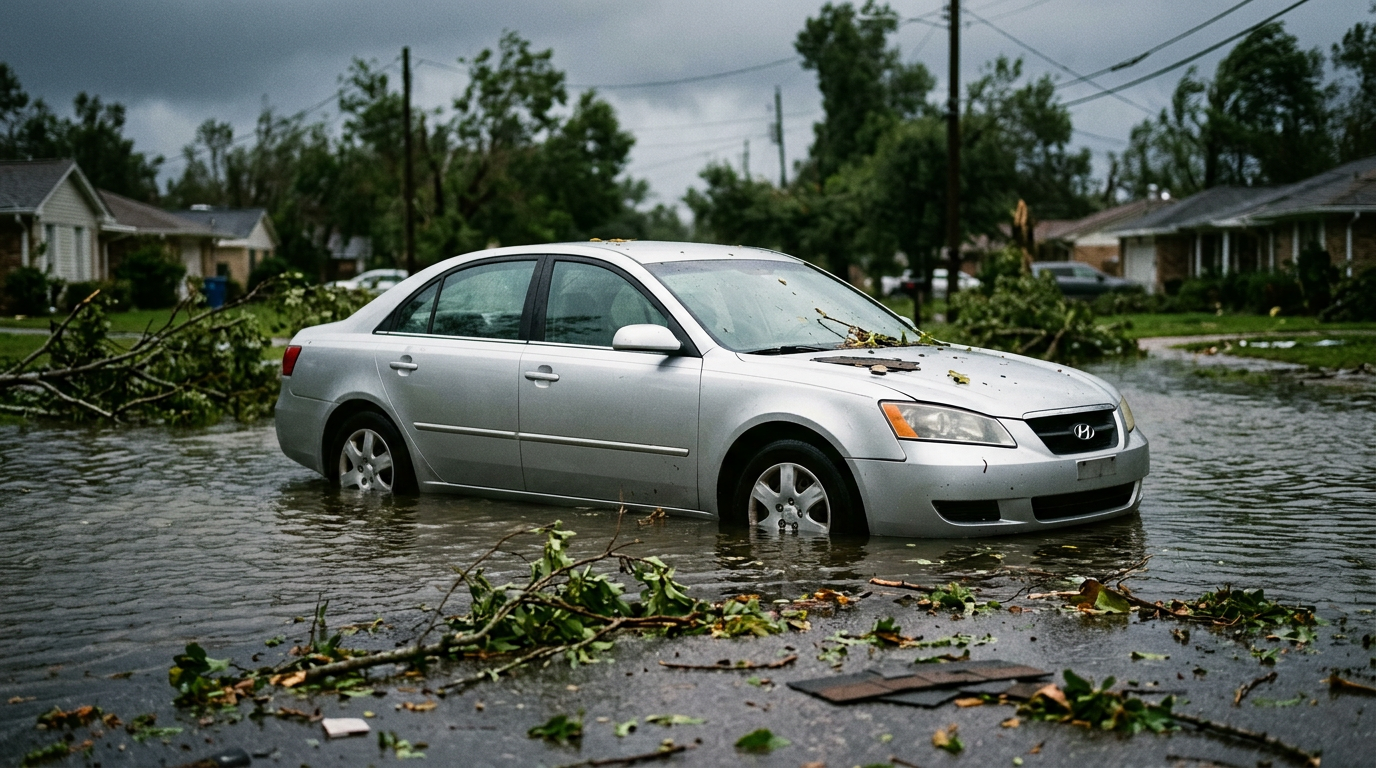
A storm passes. Your car is dented by hail, a tree branch pierces your windshield, or floodwaters submerge it overnight.
You expect insurance to help—but then hear: “Natural disasters are not covered under your policy.”
Every year, thousands of drivers find their policies don’t cover weather damage. Many assume coverage, but many policies do not. Those that offer protection often have specific limits and exclusions.
Before we dive into the details, let me clarify which natural disasters car insurance may or may not cover, and explain how you can protect yourself.
The Short Answer: It Depends on Your Policy
Basic third-party insurance: No. Natural disasters are not covered. This policy only covers damage you cause to others.
Third-party plus insurance: Usually not. Some policies include limited coverage for hail or storms, but this is not standard. Check your policy.
Comprehensive insurance: Usually yes. Most comprehensive policies cover natural disasters. But there are important exceptions and limits.
The key is to read your policy. Look for sections titled “Acts of God,” “Natural Disasters,” or “Weather Events.” If you do not see these terms, you may not be covered.
Next, let’s look at which natural disasters are typically included in standard car insurance policies.
Most comprehensive insurance policies cover the following natural disasters:
Hail
Hail is the most common weather-related claim. Hailstones can dent bodywork, crack windshields, and damage lights and mirrors. Most comprehensive policies cover this damage.
What is covered: Dents, cracked glass, broken lights, and paint damage.
What is not covered: Pre-existing damage worsened by hail. Your insurer will inspect for old damage.
Windstorms and falling trees
High winds can blow debris into your car. Trees or branches can fall onto your vehicle. Most comprehensive policies cover this.
What is covered: Damage from falling trees, branches, or flying debris.
What is not covered: Damage if you parked under a dead tree you knew was dangerous. Many policies exclude damage considered ‘foreseeable’ or preventable if a reasonable person would have recognized the risk and avoided it.
Floods
Flood damage is increasingly common. Water can destroy a car’s engine, electronics, and interior. Some comprehensive policies cover floods, while others exclude them.
What is covered: Water damage to the engine, electrical systems, upholstery, and electronics.
What is not covered: Damage if you deliberately drove into floodwater or ignored warnings to avoid flooded areas. Most policies exclude damage resulting from ‘driver negligence’ or intentional acts, which means if you could have reasonably avoided the situation, your claim may be denied.
Lightning
Lightning strikes are rare but can damage a car’s electrical system. Most comprehensive policies cover lightning damage.
What is covered: Electrical system damage, fire from a lightning strike.
However, not all natural disasters are covered. Let’s examine what is often excluded from car insurance policies.
Even with comprehensive insurance, some natural disasters may not be covered.
Earthquakes
Many policies exclude earthquake damage entirely. If you live in an earthquake-prone area, check your policy carefully and consider separate coverage.
Tsunamis
Tsunamis are almost always excluded from standard car insurance. This is rare for most drivers, but coastal residents should be aware of it.
Mudslides and landslides
Damage from mudslides or landslides is often excluded. Some policies cover it only if the slide was caused by a covered event, such as heavy rain.
Wildfires
Wildfires are usually covered under comprehensive policies as “fire damage.” However, if you live in a high-risk wildfire area, some insurers may exclude it or charge higher premiums.
How to Know If You Are Covered
Never assume you’re covered. Check your policy documents.
Step 1: Find your policy booklet or log in to your online account.
Step 2: Look for the “Comprehensive Coverage” section.
Step 3: Read the “Perils Covered” or “Risks Insured” list. This will list specific events like fire, theft, vandalism, hail, windstorm, and flood.
Carefully review the “Exclusions” section. This section will list all specific events and types of damage that your insurer does not cover, such as foreseeable damage, negligence, or certain natural disasters. Understanding these exclusions is key to knowing when your claim might be denied.
If your policy is unclear, call your insurer. Ask: “Does my policy cover hail damage? Flood damage? Wind damage from storms?” Request written confirmation.
What to Do If Your Car Is Damaged by a Natural Disaster
If your car is damaged by hail, flood, wind, or another natural disaster, follow these steps.
Step 1: Document the damage immediately.
Take photos and videos of all damage. Include wide shots of the entire car and close-ups of dents, cracks, or water damage. Do this before moving or cleaning the car.
Step 2: Do not drive the car if it is unsafe to do so.
If the windshield is cracked, the lights are broken, or water has entered the engine, do not drive. Call a tow truck. Driving a damaged car could cause more damage and affect your claim.
Step 3: Protect the car from further damage.
If possible, move the car to a garage or cover it. Cover broken windows with plastic sheeting. Your insurer expects reasonable steps to prevent further damage.
Step 4: Report the claim to your insurer.
Call your insurer immediately. Report that the car was damaged by a natural disaster. Provide your photos and videos. Follow their claims process.
Step 5: Get a repair estimate.
Your insurer may require you to use an approved repair shop. Ask before getting an estimate elsewhere.
How to Protect Your Car from Natural Disasters
You cannot control the weather, but you can reduce the risk of damage.
If hail is forecast, park in a garage or covered parking. If you have no garage, use a car cover with thick padding. Some covers are designed specifically for hail protection.
If flooding is forecast, park on high ground. Avoid underground garages, riverbanks, and low-lying areas. If floodwaters rise, do not try to move your car through water.
If high winds are forecast, avoid parking under trees, near construction sites, or near loose objects that could become projectiles.
If wildfires are near, park in a clear area away from vegetation. Follow evacuation orders. Do not leave your car in a garage if evacuating.
Finally, if you’re questioning whether natural disaster coverage is right for you, here are some factors to consider.
If your comprehensive policy does not include natural disaster coverage, you may be able to add it as an endorsement or rider.
Cost: Typically €20-100 per year, depending on your location and car.
It’s worth it if you live in an area with frequent hail, floods, or storms. A single incident can cause thousands in damage, and coverage costs are small by comparison.s.
Our recommendation: Add natural disaster coverage if you live in an area prone to such events. If you live in a low-risk area, you may choose to self-insure.
The Bottom Line
Most comprehensive insurance policies cover hail, windstorms, falling trees, and lightning. Flood coverage varies by policy. Earthquakes, tsunamis, and mudslides are often excluded.
Basic third-party and third-party plus policies do not cover natural disasters.
Check your policy today. Do not wait for a storm to find out you are not covered. If your policy does not include natural disaster protection, ask your insurer about adding it.
Coverage costs are small, but repairing weather damage can be enormous. Protect yourself before the next storm.