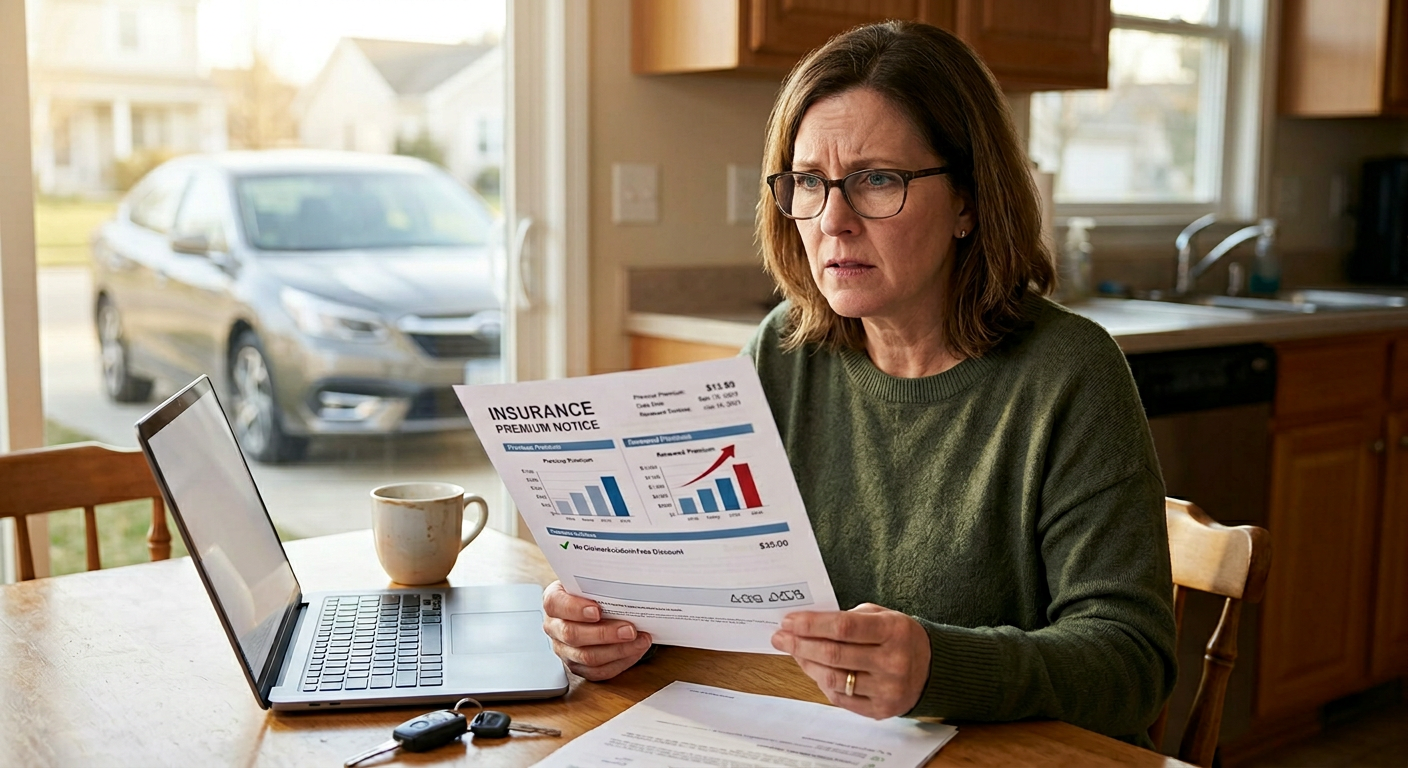
You open your renewal notice and see your car insurance price has unexpectedly increased.
You haven’t had an accident, filed a claim, changed cars, moved, or added a young driver. Nothing in your situation has changed.
So why is your price higher?
This is a common and frustrating part of personal finance. Almost every driver faces it at some point. To understand why this happens—and what you can do about it—read on.
The Short Answer: Insurance Companies Are For-Profit Businesses
It might seem obvious, but many people forget this when they see their renewal price.
Insurance companies aren’t public utilities or government agencies. They are businesses that need to make a profit. If their costs rise, your price does too, even if your own risk stays the same.
Your driving record is just one factor in your premium. Many others are out of your control, and these are often the real reason your price went up.
Reason 1: Overall Claim Costs Have Risen (Inflation)
This is the most common reason for price increases, but it’s also the one drivers understand the least.
Even without accidents, your price may rise. Insurers spread risk, raising rates if claims increase in your city, age group, or country.
What has become more expensive:
- Car repairs: Modern cars have sensors, cameras, and electronics. A minor accident that once cost €500 to fix can now cost €2,000 because bumpers include parking sensors, cameras, and radar.
- Parts: Supply chain issues have made car parts more expensive and harder to find.
- Labor: Mechanics and body shops charge more than they did a few years ago.
- Medical costs: If someone is injured in an accident, medical expenses and compensation payouts have risen with inflation.
For example, if your insurer paid out €100 million in claims last year, but this year the same number of accidents cost €120 million due to higher parts and labor costs, they need to cover that extra €20 million. So, they raise premiums for everyone, including you, even if you had no claims.
Reason 2: Your Postal Code Has Become More Expensive
Insurance companies look at risk by area. If your postal code has more accidents, thefts, or claims for things like hail or flood damage, your premium can rise even if you haven’t had any problems yourself.
What you cannot control but affects your price:
- Number of accidents in your neighborhood
- Car theft rates in your area
- Frequency of hailstorms, floods, or other weather events
- Amount of vandalism reported
For example, if you live in a quiet suburb and car thefts rise from five last year to fifteen this year, your insurer will raise premiums for everyone in your postal code to cover the higher risk. Even if your car wasn’t stolen, you still pay more because others were affected.
Reason 3: Your Age Bracket Changed (Yes, Really)
Insurance companies consider age when setting prices. Young drivers (18-25) pay the most, while those in their 30s, 40s, and early 50s pay less. Prices often start to rise again for drivers over 65.
If you move into a new age bracket, your price may change.
Typical age brackets:
- 18-25: Highest risk, highest price
- 26-35: Risk decreases, price decreases
- 36-55: Lowest risk, lowest price
- 56-65: Risk starts to increase slightly
- 66+: Risk increases more significantly, price increases
For example, if you turned 66 this year, statistics show drivers over 66 have more accidents than those aged 56-65. Your insurer raises your premium to reflect this higher risk. Even if you haven’t had an accident, your age group’s data affects your price.
Reason 4: Your Insurer Had a Bad Financial Year
Insurance companies invest the premiums they collect and earn money from those investments while waiting to pay claims.
If the stock market does poorly, insurers earn less from their investments. To make up for this, they raise premiums.
For example, if your insurer expected to earn 5% on its investments but only earned 1%, it might raise premiums for all customers by 4% to meet its profit goals. Even if you had no claims, you still pay more.
Reason 5: Your Insurer Is Testing Your Loyalty
This is the most frustrating reason, but it’s also the one you can do something about.
Many insurers use a strategy called “price walking” or the “loyalty penalty.” This means they start with low prices to attract new customers, then gradually raise rates for existing ones—even when your own circumstances haven’t changed. The insurer counts on many people accepting higher renewal rates without shopping around, leading loyal customers to pay more over time than new ones.
How it works:
- Year 1: New customer discount. You pay €600.
- Year 2: Automatic renewal. You pay €700. (16% increase)
- Year 3: Automatic renewal. You pay €780. (11% increase)
- Year 4: Automatic renewal. You pay €850. (9% increase)
Your price rises not because of your actions, but because your insurer bets you won’t switch.
Reason 6: You Lost a Discount
Insurers offer many discounts, but some expire or change over time.
Common discounts that can disappear:
- New customer discount (usually lasts 1-2 years)
- Introductory offer (first year only)
- Bundling discount (if you moved your home insurance elsewhere)
- Telematics discount (if you stopped using the black box)
- Low-mileage discount (if you now drive more)
For example, if you got a 20% new customer discount in your first year, that discount won’t apply to your second-year renewal. Your premium seems to jump by 20%, even though your base rate hasn’t changed.
What You Can Do About It
Here’s the good news: you’re not powerless. Here’s what to do if your insurance goes up for no clear reason.
Step 1: Check your renewal documents for changes.
Look for:
- Did your no-claims bonus level change?
- Did any discount disappear?
- Did they add coverages you didn’t ask for?
Sometimes insurers add coverages automatically. Make sure to remove anything you don’t need.
Step 2: Get quotes from competitors.
This is the most effective step. Spend about 20 minutes getting three quotes from other insurers, using the same coverages and deductibles as your current policy.
If other companies offer lower prices for the same coverage, you have leverage.
Step 3: Call your current insurer and negotiate.
Say: “I’ve been a customer for X years. I have no claims. My renewal is €[amount]. I have a quote from [competitor] for €[lower amount] for the same coverage. Can you match it?”
Many insurers would rather lower your price than lose you as a customer.
Step 4: If they won’t negotiate, switch.
Switching is easy. Your new insurer takes care of almost everything. You don’t need to call your old company; the new one will notify them for you.
Step 5: If you stay, set a reminder for next year.
Set a reminder for 30 days before your next renewal. You’ll want to repeat this process. Insurance companies hope you’ll forget, but don’t let that happen.
When a Price Increase Might Be Fair
Not every price increase is unfair. Sometimes, they reflect real changes in your risk or in the market.
A fair increase might happen if:
- You added a young or inexperienced driver to your policy.
- You moved to a higher-risk postal code.
- You increased your annual mileage.
- You had an accident or filed a claim (even a small one)
- You received traffic tickets or penalty points.
But if none of these things happened and your price still went up, you’re almost certainly overpaying.
The Bottom Line
Your car insurance can increase even without any accidents. Several outside factors contribute, including inflation, your postal code, age bracket, insurer returns, loyalty penalties, and expired discounts.
The system isn’t always fair, but you can beat it.
Compare quotes yearly, negotiate your renewal, and consider switching. Never accept renewal without reviewing first.
Drivers who follow these steps often pay hundreds less per year than those who don’t. The difference isn’t luck—it’s taking action.
Your renewal letter has arrived. Now you know what steps to take.