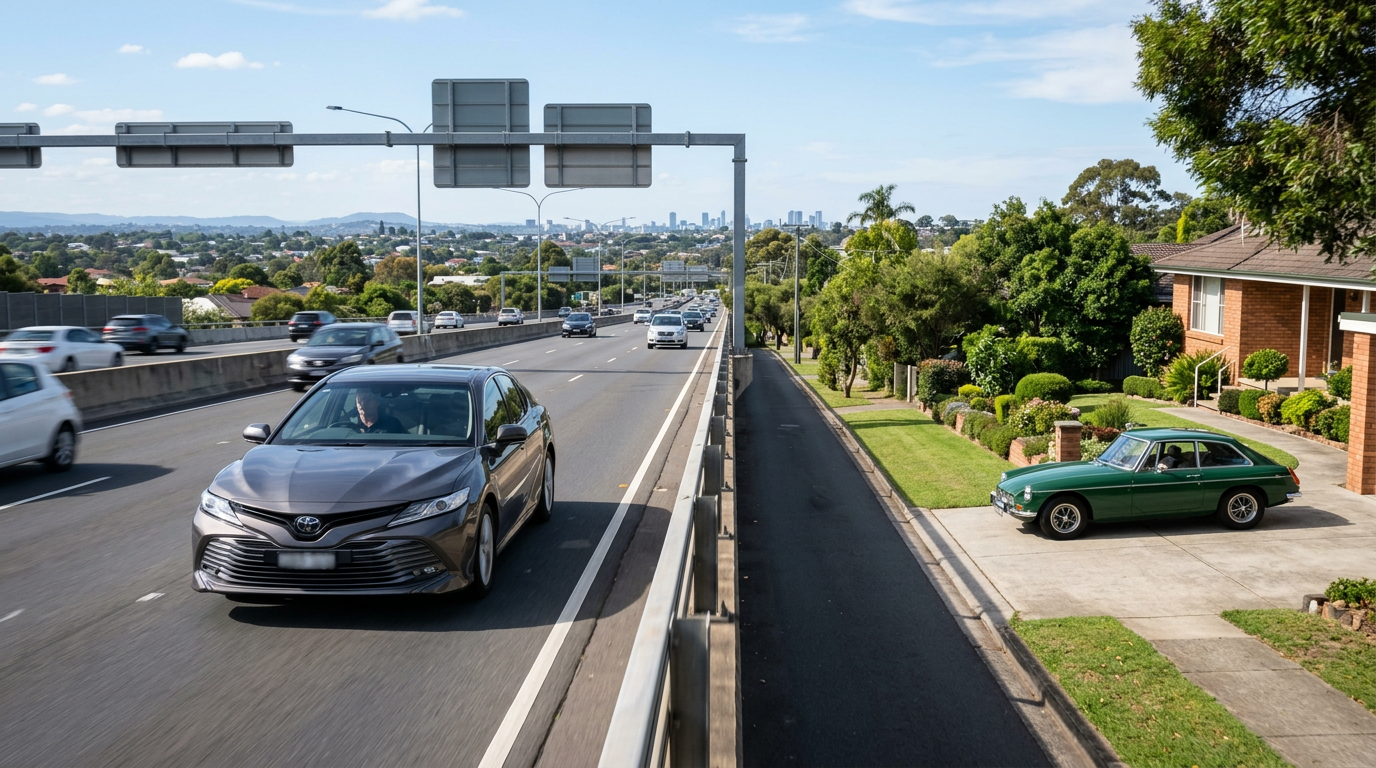
You drive less than your neighbors. You work from home. You walk to the grocery store. You only use your car on weekends. Every year, you pay the same insurance premium as your friend who commutes two hours daily. And you wonder: “Why am I paying the same when I drive so much less?”
It’s a fair question. Traditional car insurance pricing does not account for how much you drive: a driver covering 5,000 km per year pays the same base rate as one driving 30,000 km, assuming similar cars and profiles.
Pay-per-kilometer insurance promises to change that. You pay a low daily or monthly base rate, plus a small per-kilometer fee. Drive less, pay less. Drive more, pay more.
But is it actually cheaper? The answer is not simple. To find out, let me explain exactly how pay-per-kilometer insurance works, and how it compares to traditional insurance.
How Traditional Insurance Works
Traditional car insurance uses a fixed annual premium. Your price is based on factors that do not change with your mileage.
Factors that affect traditional insurance:
- Your age and driving experience
- Your claims history (bonus-malus level)
- Your postal code
- Your car’s make, model, and value
- Your car’s parking location (garage, driveway, street)
- Your annual mileage estimate (they ask, but it rarely changes your price much)
Your actual kilometers driven have little impact. A driver who estimates 8,000 km usually pays about the same as one who estimates 20,000 km. Insurers assume most drivers fall in a similar risk category.
The problem is that low-mileage drivers subsidize high-mileage drivers. You pay for their risk even though you drive less.
How Pay-Per-Kilometer Insurance Works
Pay-per-kilometer insurance completely changes the pricing model.
Typical pay-per-kilometer structure:
- A low daily or monthly base rate covers administrative costs, roadside assistance, and fixed policy costs. Usually €0.30 to €1.00 per day.
- A per-kilometer rate. This covers the actual risk of driving. Usually €0.02 to €0.06 per kilometer.
- A maximum or cap. Many policies have an upper limit. After a certain number of kilometers, often 10,000 to 15,000 per year, you stop paying per kilometer or switch to a reduced rate.
Example calculation:
- Daily base rate: €0.50 per day (€182.50 per year)
- Per-kilometer rate: €0.04 per km
- You drive 6,000 km per year.
Annual cost = €182.50 + (6,000 × €0.04) = €182.50 + €240 = €422.50
Compare this to a traditional policy that might cost €700 for the same coverage. You save more than €275 per year.
Who Benefits Most from Pay-Per-Kilometer Insurance? Understanding who benefits can help decide whether this option makes sense for you.
Pay-per-kilometer insurance is not for everyone. It benefits some drivers and is a bad deal for others.
You are a good candidate for pay-per-kilometer insurance if:
- You drive less than 10,000 km per year.
- You have a second car that you rarely use.
- You work from home and only drive on weekends.
- You use public transit or cycling for daily commuting.
- You are retired and drive mostly for errands and visits.
- Your driving is predictable and mostly local.
You are NOT a good candidate for pay-per-kilometer insurance if:
- You drive more than 15,000 km per year.
- You have a long daily commute.
- You take frequent long road trips.
- You use your car for work (delivery, rideshare, sales)
- You prefer predictable fixed costs over variable costs.
The Break-Even Point. Every driver has a break-even point—the number of kilometers at which pay-per-kilometer and traditional policies cost the same. Drive less to save; drive more, and traditional insurance becomes cheaper.y.For many drivers, this break-even range is typically between 10,000 and 15,000 km per year. If your annual driving is within this window, pay-per-kilometer insurance is generally more economical; if it is above this window, traditional insurance is likely less expensive.
Example:
- Traditional insurance premium: €700 per year
- Pay-per-kilometer base rate: €200 per year
- Pay-per-kilometer per-km rate: €0.05
Break-even calculation: (€700 – €200) ÷ €0.05 = 10,000 km
If you drive less than 10,000 km per year, pay-per-kilometer is cheaper. If you drive more than 10,000 km, traditional insurance is cheaper.
Hidden Costs and Limitations
Before you switch, understand the downsides of pay-per-kilometer insurance.
You must track your mileage. Most policies require installing a telematics device or using a mobile app that tracks your distance. Some drivers do not want their driving monitored.
Annual mileage limits. Many policies have a maximum annual mileage, often 10,000 to 15,000 km. If you exceed it, your per-kilometer rate may rise, or you may have to switch to a traditional policy.
Less coverage for the same price. Pay-per-kilometer policies often have lower limits on roadside assistance, replacement cars, or towing distance. Compare carefully.
Not available from all insurers. Pay-per-kilometer insurance is still a niche product. Not every company offers it. You may need to switch insurers to get it.
Higher base rates for some drivers. Young drivers, those with poor claims history, or in high-risk postal codes may face higher daily base rates that erase savings.
Realistic Savings by Driving Profile
Profile 1: The low-mileage driver
- Annual distance: 5,000 km
- Traditional premium: €650
- Pay-per-kilometer premium: €200 base + (5,000 × €0.04) = €400
- Annual savings: €250
Profile 2: The average driver
- Annual distance: 10,000 km
- Traditional premium: €700
- Pay-per-kilometer premium: €200 base + (10,000 × €0.04) = €600
- Annual savings: €100
Profile 3: The high-mileage driver
- Annual distance: 18,000 km
- Traditional premium: €750
- Pay-per-kilometer premium: €200 base + (18,000 × €0.04) = €920
- Annual loss: €170 (pay-per-kilometer is more expensive)
Profile 4: The very low-mileage second car
- Annual distance: 2,000 km
- Traditional premium: €500 (second car discount)
- Pay-per-kilometer premium: €150 base + (2,000 × €0.04) = €230
- Annual savings: €270
Other Ways Low-Mileage Drivers Can Save
If pay-per-kilometer insurance is unavailable or not right for you, there are other options.
Low-mileage discounts. Some traditional insurers offer discounts if you drive less than 8,000 or 10,000 km per year. You must provide an odometer reading annually.
Telematics discounts. Even with traditional insurance, many insurers offer a “black box” device that monitors your driving. Safe low-mileage drivers can save 20-30%.
Usage-based insurance. Some insurers offer hybrid policies. You pay a low base rate plus a per-day rate only on days you drive. If you drive three days per week, you save significantly.
Second car discounts. If you have two cars and one is rarely used, many insurers offer a steep discount on the second car’s policy.
The Bottom Line: Pay-per-kilometer insurance is cheaper for drivers who cover fewer than 10,000 to 12,000 km per year. Those who drive more pay lower costs with traditional insurance.r.
The savings can be significant. Low-mileage drivers can save €200 to €400 per year compared to traditional policies. Very low-mileage drivers with second cars can save more.
However, pay-per-kilometer insurance is not for everyone. You must be comfortable with mileage tracking, stay within annual limits, and compare coverage levels carefully.
If you drive less than 8,000 km per year, pay-per-kilometer insurance is almost certainly worth considering. Get a quote, compare it to your traditional renewal, and do the math for your specific distance.
And if you drive more than 15,000 km per year, stick with traditional insurance. Pay-per-kilometer will cost you more.
The right choice depends on your driving habits. Now you know how to decide.