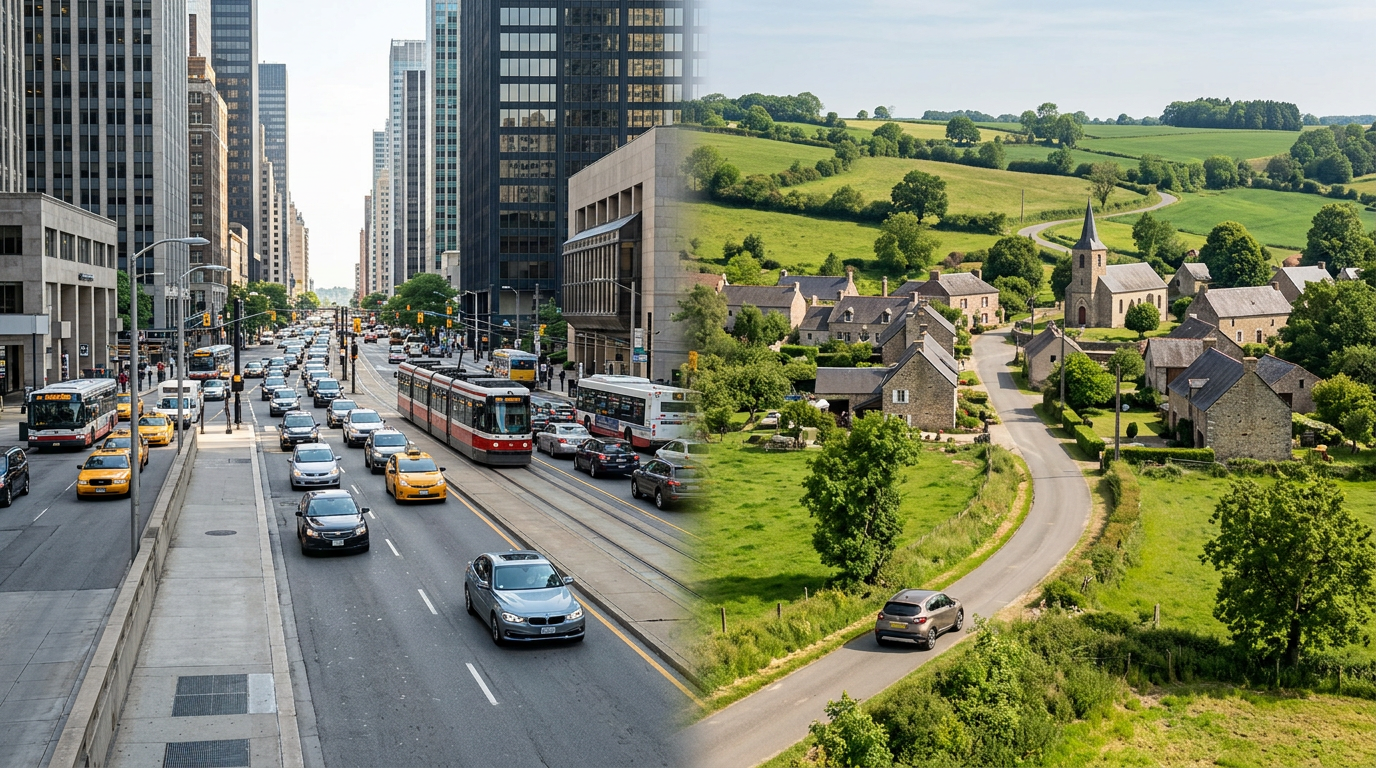
Does Where I Live (City or Village) Affect My Insurance Price?
You live in a village. Your friend lives in a city. You both have the same car, driving record, and age. Yet your friend’s insurance premium is much higher. Why?
Where you live greatly influences your insurance costs.
Insurance companies use your postal code as a key factor in calculating your premium. Your address reveals the risks you face daily, which differ greatly between a city and a village. How your location affects your insurance price and what you can do about it.
Why Your Location Matters to Insurers
Insurance is based on risk. Insurers collect data on claims by postal code. They know exactly how many accidents, thefts, and claims happen in every neighborhood.
If your area has many claims, you pay more; if you have few claims, you pay less. Regardless of your driving, you are grouped with others nearby.
What insurers look at by location:
- Number of accidents in your area
- Car theft rates in your postal code
- Frequency of vandalism claims
- Amount of hail, flood, or storm damage claims
- Population density (more cars = more accidents)
- Average income levels (affects the type of cars and claims costs)
City vs. Village: The Key Differences
City drivers usually pay more for insurance. Here’s why.
Accident rates are higher. More cars create more crashes. City driving means constant interaction with vehicles, pedestrians, cyclists, and parked cars. Every intersection could be a collision.
Higher theft rates. Cities have higher rates of car theft, wheel theft, and theft from inside vehicles. Thieves target densely populated areas with more cars and more opportunities.
Vandalism rates are higher. Parked cars in cities are more likely to be scratched, keyed, or broken into. More people passing means more chances for vandalism.
Repairs cost more. City body shops and mechanics charge higher labor rates. Insurers pass these costs to you.
Parking location matters. Street parking is riskier than garage parking; cities have more of it. Villages have more driveways and garages.
Village drivers usually pay less for insurance. Here’s why.
Accident rates are lower. Fewer cars mean fewer collisions. Village roads see less traffic and slower speeds.
Lower theft rates. Thieves target cities with more cars and easier escape routes. Villages have lower theft rates.
Vandalism rates are lower. Fewer people passing means a lower chance of vandalism.
Repair costs are lower. Rural body shops typically charge less for labor.
Safer parking. Most village residents have driveways, garages, or dedicated parking spaces. Street parking is less common.
How Much Difference Does Location Make? Location can account for 10-30% of your premium.ium.
Example comparison:
- Same driver, same car, same driving record
- City center postal code (high risk): €900 per year
- Suburban postal code (medium risk): €750 per year
- Village postal code (low risk): €600 per year. The village driver pays €300 less per year than the city driver. Over five years, that’s €1,500 saved—just for location.ve.
Other Location Factors That Affect Your Price. It’s not just city versus village. Other local factors matter too.er.
Crime rate. Within a city, postal codes with higher crime rates pay more than those with lower crime rates. A safe neighborhood in a city may have rates similar to those in a village. Parking type matters. A locked garage is cheaper than street parking; driveways are typically in between. Tell your insurer if you change parking to reduce your premium. Living near a highway or crash-prone intersection can raise your premium. Insurers know accident-prone roads.
Weather risk. If your area has frequent hailstorms, floods, or wildfires, your premium will be higher. Some postal codes are designated as high-risk for natural disasters.
What If You Move?
If you move, you must notify your insurance company. Your premium may change. from a village to a city: Your premium will likely increase. Sometimes significantly. Be prepared for a higher bill. Move from a city to a village: expect your premium to drop. Call your insurer, update your address, and ask for a revised premium. Don’t assume it’s automatic. Move within a city: your premium may rise or fall, depending on neighborhood crime rates.sa.
What If You Have Two HomesIf you split time between two homes, your insurer needs both addresses. They use the place where your car is parked the most. If you park in a city garage for six months and a village garage for six months, they pick the higher-risk address. Be honest. If you claim a village address but mostly live in the city and have an accident there, your insurer may deny your claim for false information.
Can You Lower Your Premium by Changing Your Address?
You must use your true residential address. You cannot use a friend’s address in a cheaper postal code. That is insurance fraud. If your insurer discovers this, they can cancel your policy, deny claims, and pursue legal action.to lower your location-based risk.
Park in a garage if you have access. Tell your insurer. Your premium may drop. security devices. Alarms, tracking devices, and immobilizers can reduce the risk of theft. Some insurers offer discounts for these devices, especially in high-theft areas.
Use a locked parking facility. If you live in a city and must park on the street, consider renting a space in a locked garage. The cost may be offset by lower insurance premiums.
The Bottom Line
Yes, where you live significantly affects your insurance price. City drivers typically pay 10-30% more than village drivers for the same car and driving record. Higher accident, theft, and vandalism rates, as well as repair costs, contribute to higher city premiums.
You cannot change your address to save money. That is fraud. But you can reduce your location-based risk. Park in a garage if possible. Install security devices. Maintain a clean driving record. Compare quotes annually.
If you are moving, factor insurance costs into your decision. A cheaper apartment in a high-crime area may cost you more in insurance than a slightly more expensive apartment in a low-crime area.
Being a safe driver, choosing a low-cost car, and comparing quotes each year are all things you control. But your location remains one of the strongest influences on your insurance premiums.