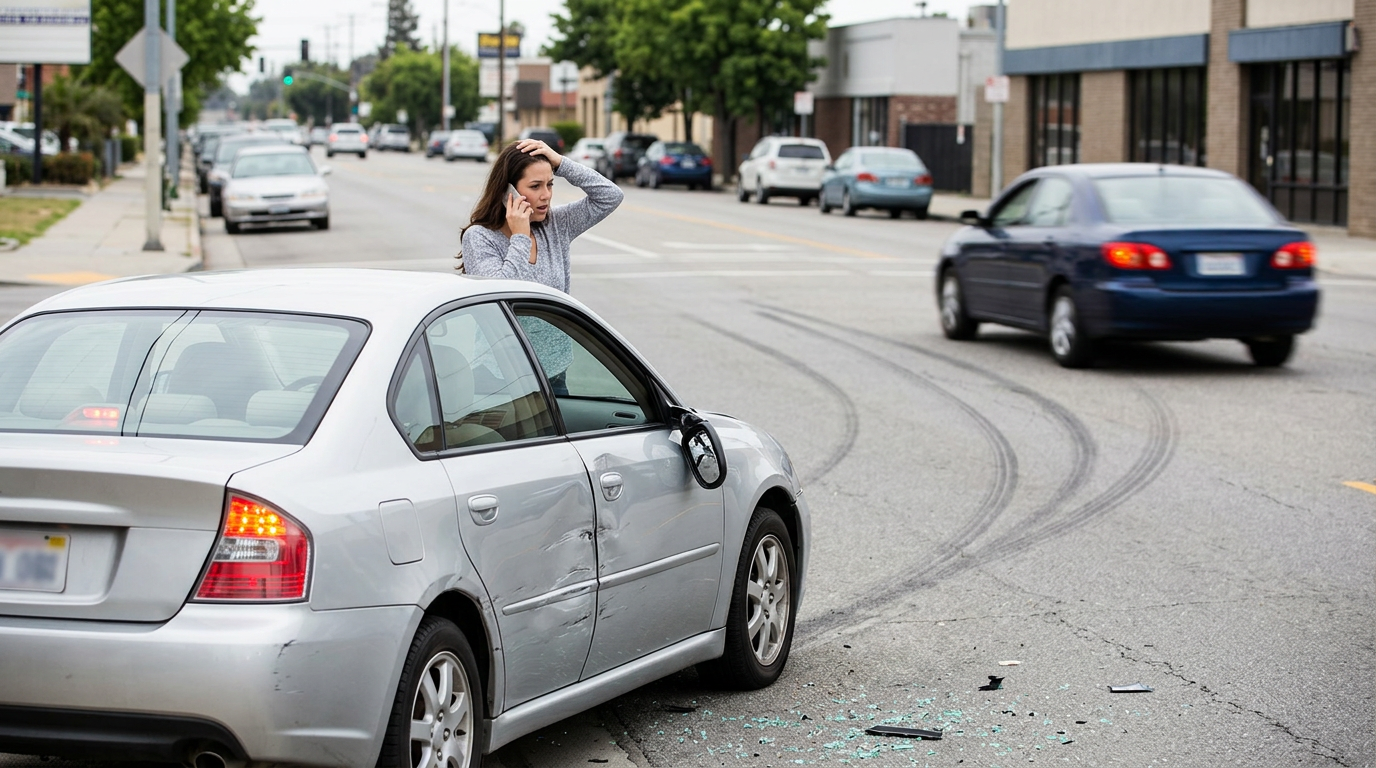
You feel the impact. Your car lurches. Before you can process what happened, the other driver speeds away. Their taillights disappear around the corner. You are left alone, shaken. You have a damaged car and no one to exchange information with.
This is a hit and run—illegal, terrifying, and more common than you think.
The other driver knows they did something wrong. They fled for reasons such as lacking insurance or a license, driving a stolen car, being drunk, or simply panicking.
Whatever the reason, you are now dealing with the aftermath. Let me walk you through exactly what to do when the other driver flees the scene.
First, Do Not Chase Them
Your instinct will be to follow them, catch them, or get their license plate. Do not do this.
Chasing a fleeing driver can lead to dangerous situations. There is a risk of causing another accident or injury, or of facing legal issues. The other driver may also react unpredictably.
Let them go. Your safety is more important than catching them. The police have ways to find hit-and-run drivers. You do not need to be a hero.
Step 1: Stop and Stay at the Scene
You must stop. Leaving the scene of an accident, even if caused by someone else, is illegal. Pull over to a safe location if possible. Turn on your hazard lights.
Do not drive away to chase the other driver or because you are upset. Stay where you are. The accident scene is evidence. Leaving destroys it.
Step 2: Call the Police Immediately
This is your most important action. Call emergency services right away. In the European Union, dial 112; in the UK, dial 999; and in the US, dial 911.
Tell the operator exactly what happened. Give them the following information if you have it:
- The other driver’s license plate number (even a partial number is helpful)
- The make, model, and color of the other vehicle
- The direction the other driver fled
- A description of the driver (gender, approximate age, clothing)
- The exact location of the accident
- The time of the accident
The police will dispatch an officer to your location. They will also alert other officers in the area to look for the fleeing vehicle.
Step 3: Stay at the Scene and Wait for Police
Do not leave, even if you think there is no damage or you are in a hurry. Wait for the police to arrive.
While you wait, do not touch or move your car, unless it is blocking traffic dangerously. If you must move it, take photos first. Capture the damage, your car’s position, and any debris left by the other vehicle.
Paint chips, broken glass, or parts of the other car can help identify it. Do not throw anything away. The police may collect these items as evidence.
Step 4: Look for Witnesses
While you wait for the police, look around. Are there other drivers, pedestrians, shoppers, or people in nearby buildings who saw the accident?
Approach anyone who may have seen what happened. Ask for their name, phone number, and what they saw. Write down their exact words.
Witnesses are incredibly valuable in hit-and-run cases. They can provide descriptions of the other vehicle and driver. They can confirm your account of what happened. They can help the police identify the fleeing driver.
Step 5: Look for Security Cameras
Many accidents happen near businesses, homes, or traffic intersections with cameras. Look around. Does the nearby gas station, bank, apartment building, or traffic light have the addresses of buildings with cameras facing the street, and report them to the police? Request footage quickly—many systems overwrite videos after a few days. a few days.
Step 6: File a Police Report. When the police arrive, give a complete statement. Tell them everything you remember. Do not guess or exaggerate. Stick to the facts.facts.
Ask for the police report number and write it down. Ask how to obtain a copy of the report. You will need it for your insurance claim. If the police can identify the other driver from the license plate or other evidence, they will pursue charges. Hit-and-run is a serious offense. Penalties can include fines, license suspension, and even jail time.
Step 7: Report to Your Insurance Company
Call your insurer as soon as possible. Tell them you were involved in a hit-and-run. Give the police report number and any information you have about the other vehicle.
What your insurance covers depends on you. If you have comprehensive coverage, you’re typically covered for hit and run. Your insurer pays for repairs, minus your deductible. Your no-claims bonus may be affected, though some insurers protect it for not-at-fault hit-and-run claims. Ask your insurer. If you have third-party or third-party plus coverage, your policy does not cover damage to your car. If the driver isn’t found, you pay for repairs yourself.
If you have uninsured motorist coverage, some policies include it as an add-on. It covers you if the other driver is uninsured or unidentified. Check your policy. If you have it, your insurer may pay for repairs even with third-party coverage.
If you remembered the other driver’s license plate number, it increases the likelihood of locating them. Share this information with the police, who can check the registered owner and investigate further.
If yoIf you saw and remember the other driver’s license plate number, you have a much better chance of finding them. Give the license plate number to the police. They can look up the registered owner. They can visit the owner at their address. They can question the owner about the accident.
If the police find the driver, that driver is now in serious legal trouble. They fled the scene of an accident. That is a criminal offense. They will face fines, license suspensions, and potentially jail time. Their insurance must pay for your damages. Fleeing often indicates they knew they were at fault, so the insurer will likely accept liability. liability.
How to Protect Yourself for the Future
The best time to prepare for a hit-and-run is before one. Install a dash cam. A front camera records everything ahead; a rear camera captures what’s behind. If a driver hits you and flees, it can capture their license plate and vehicle description. This evidence is invaluable for police and insurers. A quality dash cam costs €50–€150—one of the best investments for your car. Your car.
Keep comprehensive coverage. If your car is worth more than €5,000, consider it. This protects you not only from hit-and-run drivers but also from theft, fire, vandalism, and natural disasters.
Add uninsured motorist coverage. If you have third-party or third-party plus, ask your insurer about adding it. It costs a small amount per year. It covers you if the other driver is uninsured or unidentified.
Know your policy. Read yoKnow your policy. Read your insurance policy to find out if hit-and-run accidents are covered, if you have uninsured motorist protection, and how your no-claims bonus is affected. Do this today, not after an accident. An accident is stressful and unfair. You did nothing wrong. Someone else broke the law and left you to deal with the consequences.
But you are not powerless.
Stay at the scene. Call the police right away. Do not chase the fleeing driver. Look for witnesses and security cameras. File a police report. Report to your insurer.
If you have comprehensive coverage, your repairs should be covered after your deductible. With only third-party coverage, you will usually pay for repairs yourself unless the driver is found and their insurer is held liable.
The best protection is preparation. Install a dash cam. Keep comprehensive coverage if your car has value. Add uninsured motorist coverage to your policy. Know what your policy covers before an accident happens.
While you cannot control other drivers’ actions, you can take steps to ensure you are prepared and protected if such a situation arises.