Answer:
Car insurance terms can be confusing. Here’s a simple explanation.
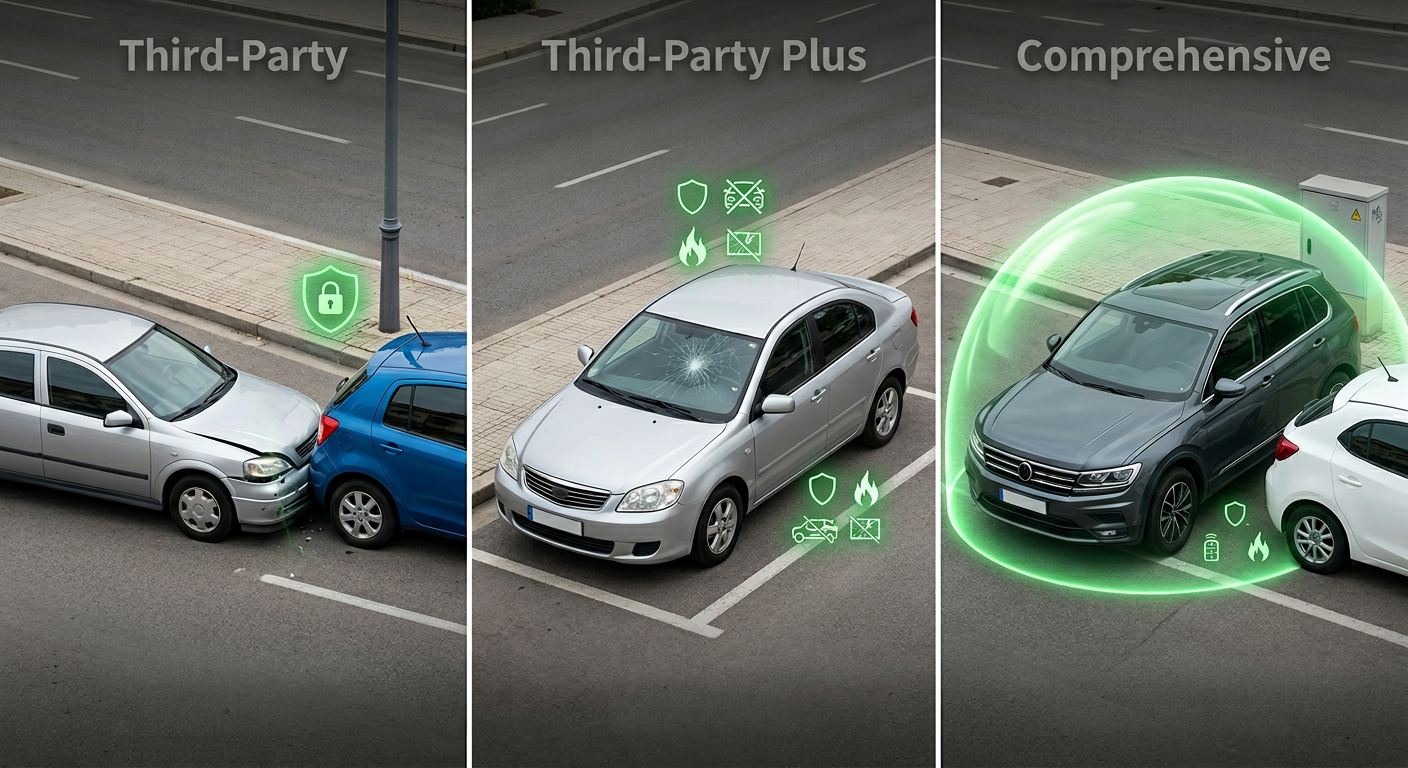
Third-party (basic):
- Covers damage you cause to others’ cars, people, or property.
- Meets mandatory liability requirements.
- Does not cover your own car.
- Choose whether your car is old or has low value, and select the lowest cost.
Third-party plus: Covers everything in basic third-party.
- Adds coverage for windshield, fire, theft, hail, roadside help, and replacement car.
- Still doesn’t cover your own car if you’re at fault.
- Choose for added protection at less cost than comprehensive, usually for cars 5–10 years old.
Comprehensive: Covers all of the above.
- Also covers damage to your car, including at-fault accidents.
- A deductible may apply; you pay part of the repair costs.
- Choose new or financed cars, or for maximum protection.
Practical example:
- If you cause an accident and damage your car, only comprehensive covers it; if your wheels are stolen or your windshield breaks, both third-party plus and comprehensive cover it (basic third-party does not).
- Your wheels are stolen: Third-party plus and comprehensive cover this. Basic third-party doesn’t.
- Your windshield breaks: Third-party plus and comprehensive cover this.
Our recommendation: If your car is worth less than €3,000, choose basic third-party. If your car is worth €3,000-€10,000, go with third-party plus for the best balance. If your car is worth more than €10,000 or is new, select comprehensive without hesitation.