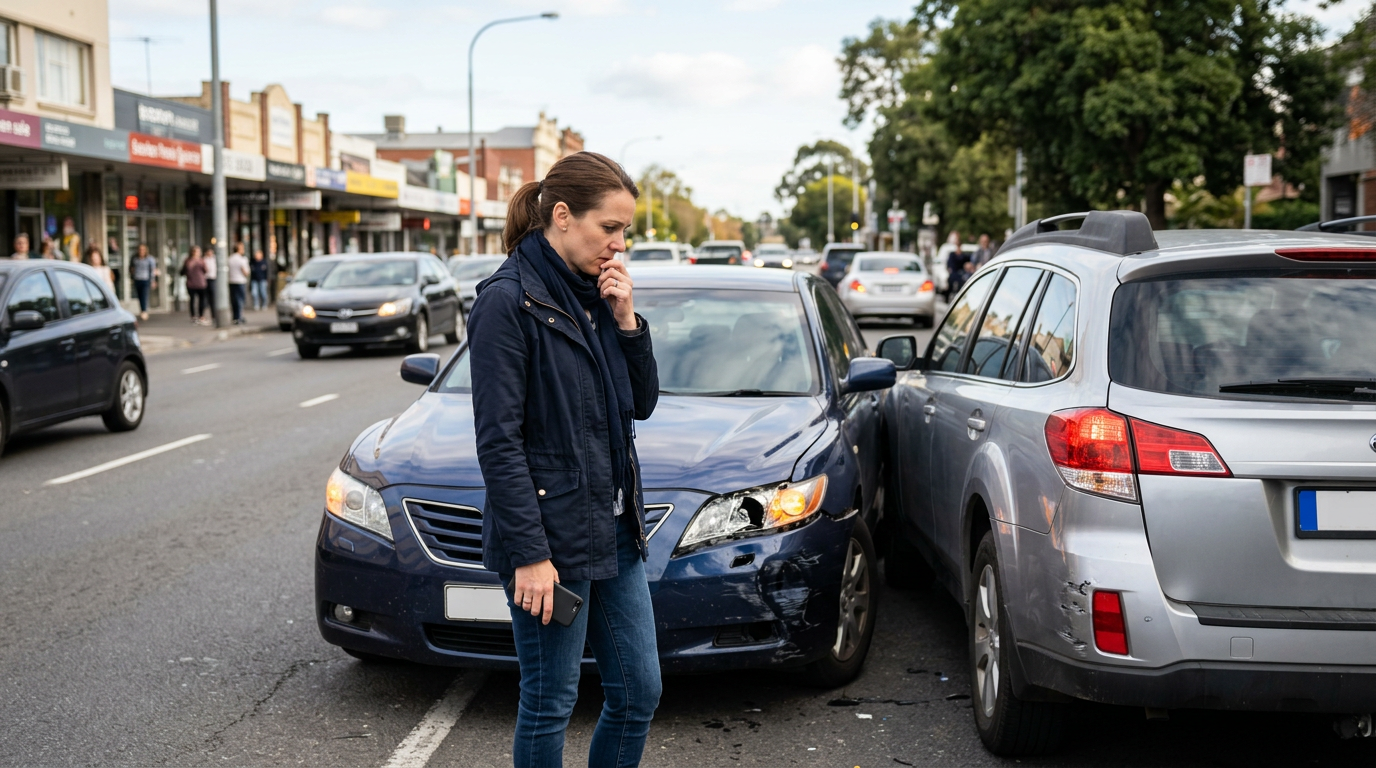
You were involved in an accident—for example, you rear-ended someone at a traffic light, backed into a pole, or lost control on a curve and hit a tree. It’s natural to feel concerned about what happens next. Will your insurance help, or will you face unexpected costs?
The answer depends on your insurance type. Many drivers only discover their coverage level after an accident, so it’s helpful to understand the differences beforehand.
Let me walk you through what your insurance typically covers if an accident is your fault and how you can make sure you have the right protection in place.
The Short Answer: It Depends on Your Coverage
If you have comprehensive insurance, your policy covers damage to your car and the other driver’s car. You pay your deductible; your insurer pays the rest.
If you have third-party plus insurance, your policy covers damage to the other driver’s car but not your own. You pay for your repairs out of pocket.
If you have basic third-party insurance, your policy covers damage to the other driver’s car but not your own. You pay for your repairs out of pocket.
The critical difference is whether your coverage includes your own vehicle. Third-party and third-party plus cover only damage you cause to others. Comprehensive covers damage to your car as well.
What Is Always Covered (Even with Basic Third-Party)
No matter your insurance type, you can take some comfort in knowing that the following is always covered when the accident is your fault.
Damage to the other driver’s car: Your insurance pays to repair the other person’s vehicle. This is required by law.
Injuries to the other driver and their passengers: Your insurance pays for medical treatment, rehabilitation, and compensation for pain and suffering. This is also required by law.
Damage to property: If you hit a lamppost, a fence, a building, or any other structure, your insurance pays for the repairs.
These coverages are mandatory. You cannot drive legally without them. Limits are usually high, often €1 million or more for injury claims.
What Is Covered Only with Comprehensive Insurance
If you have comprehensive insurance, your policy covers damage to your own car even when the accident is your fault.
At-fault collision damage: You rear-end someone. Your front bumper is crushed. Comprehensive pays for your repairs, minus your deductible.
Single-vehicle accidents: You hit a tree, slide into a ditch, or roll over. No other car is involved. Comprehensive pays for your repairs, minus your deductible.
Parking accidents: You back into a pole or scrape a wall. Comprehensive pays, minus your deductible.
What you pay is your deductible. For example, with a €500 deductible and €3,000 repair cost, you pay €500, and your insurance pays €2,500.
What Is NOT Covered (Even with Comprehensive)
Even comprehensive insurance has limits. Here is what is typically not covered, even with full coverage.
Normal wear and tear: Your engine fails because you did not change the oil. Your clutch wears out. Your brakes need replacement. Comprehensive does not cover maintenance or mechanical breakdowns.
Intentional damage: If you deliberately crash your car, your insurance will not pay. This is fraud.
Driving under the influence: If you drive drunk or under the influence of drugs, your insurance may pay for third-party damage by law, but it will seek reimbursement. Your own damage is not covered.
Driving without a valid license: If your license is suspended or expired, your insurance may deny coverage.
Using your car for business without declaring it: If you deliver food or drive for a rideshare service without informing your insurer, your claim may be denied.
Real-Life Examples
Let me show you how this works with three real-life scenarios, so you can more easily picture how your own situation might play out. Many people find it helpful to see practical examples when they’re facing uncertainty.
Scenario 1: You have basic third-party insurance
You are distracted for a second and rear-end the car in front of you. Your car needs €4,000 in repairs; the other car needs €1,500.
- Other driver’s car: Covered. Your insurance pays €1,500.
- Your own car: NOT covered. You pay €4,000 out of pocket.
- Total out of pocket: €4,000
Scenario 2: You have third-party plus insurance
Same accident. Same damage.
- Other driver’s car: Covered. Your insurance pays €1,500.
- Your own car: NOT covered. You pay €4,000 out of pocket.
- Total out of pocket: €4,000
Third-party plus adds coverage for fire, theft, and windshield, but does not cover at-fault accident damage.
Scenario 3: You have comprehensive insurance with a €500 deductible
Same accident. Same damage.
- Other driver’s car: Covered. Your insurance pays €1,500.
- Your own car is covered minus your deductible. Your insurance pays €3,500; you pay €500.
- Total out of pocket: €500
The difference is huge. With comprehensive, you pay €500; without it, you pay €4,000.
Will Your Premium Increase?
Generally, causing an accident means your premium will increase, no matter your coverage. But understanding this in advance can help you plan effectively.
How much will it increase? Typically, 30-80% for the first year. Your premium stays higher for three to five years, decreasing each year gradually without further claims.
Example: You paid €800 per year before the accident. After the accident, your premium increases to €1,200 per year for the first year. In year two, it drops to €1,000. In year three, it drops to €900. By year four or five, you may return to your original premium.
Should You File a Claim for a Minor At-Fault Accident?
This is a common dilemma. The damage is minor. Your repair cost is €900. Your deductible is €500. Your insurance would pay €400.
If you file a claim, you may save €400 on repairs immediately, but it’s natural to worry about what this will mean for your future premiums. That increase could cost much more than €400 over time.
Example of the math:
- Repair cost: €900
- Deductible: €500
- Insurance pays: €400
- Premium increase over three years: €600 (estimated)
Total cost if you file a claim: €500 deductible plus €600 increased premiums equals €1,100.
Total cost if you pay out of pocket: €900
In this example, paying out of pocket saves you €200 overall, which can feel like a relief in a stressful situation.
Rule of thumb: If repair costs less than double your deductible, pay yourself. Do not file a claim. The long-term premium increase will cost more than the repair.
What About the Other Driver’s Claim?
Even if you do not file a claim for your damage, the other driver will likely file against your insurance. You cannot stop them.
Your insurance will still support the other driver’s claim. This can affect your premium. Even if you don’t file for your own car, you’re not alone through this process.
If the accident is minor and the other driver agrees, you could pay for their repairs directly. This keeps the accident off your insurance record, and your premium will not increase. But this is risky. The other driver could later claim injuries or more damage. Get a signed agreement if you choose to do so. tect Yourself
The best protection against the stress and financial impact of at-fault accidents is comprehensive insurance, especially if your car has significant value. Knowing you have coverage can provide peace of mind.
Our recommendations:
- Car worth more than €10,000: Comprehensive insurance is essential because one at-fault accident could cost thousands in repairs.
- Car worth €Car worth €5,000-10,000: Comprehensive is strongly recommended. The annual premium is worth the protection. less than €5,000: Comprehensive may not be worth it. You might be better off saving the premium difference and self-insuring.
- Car with a loan or lease: You likely have no choice. The bank requires a comprehensive.
Also, consider adding bonus protection to your policy. It prevents your premium from increasing after your first at-fault accident. The cost is small and the protection valuable.
The Bottom Line
If you cause an accident, your insurance always covers the damage you cause to others. This is required by law.
But coverage for your own car depends on your policy. Comprehensive insurance covers your car, minus your deductible. Third-party and third-party plus do not cover your car at all.
The difference can be thousands of euros. A driver with comprehensive pays a few hundred euros for the deductible; a driver without pays the full repair cost out of pocket.
Check your policy. Review your policy and understand what is covered. If your car is valuable and you only have third-party coverage, upgrading to comprehensive coverage may help avoid unexpected high costs. Just one accident can offset years of premium difference.